
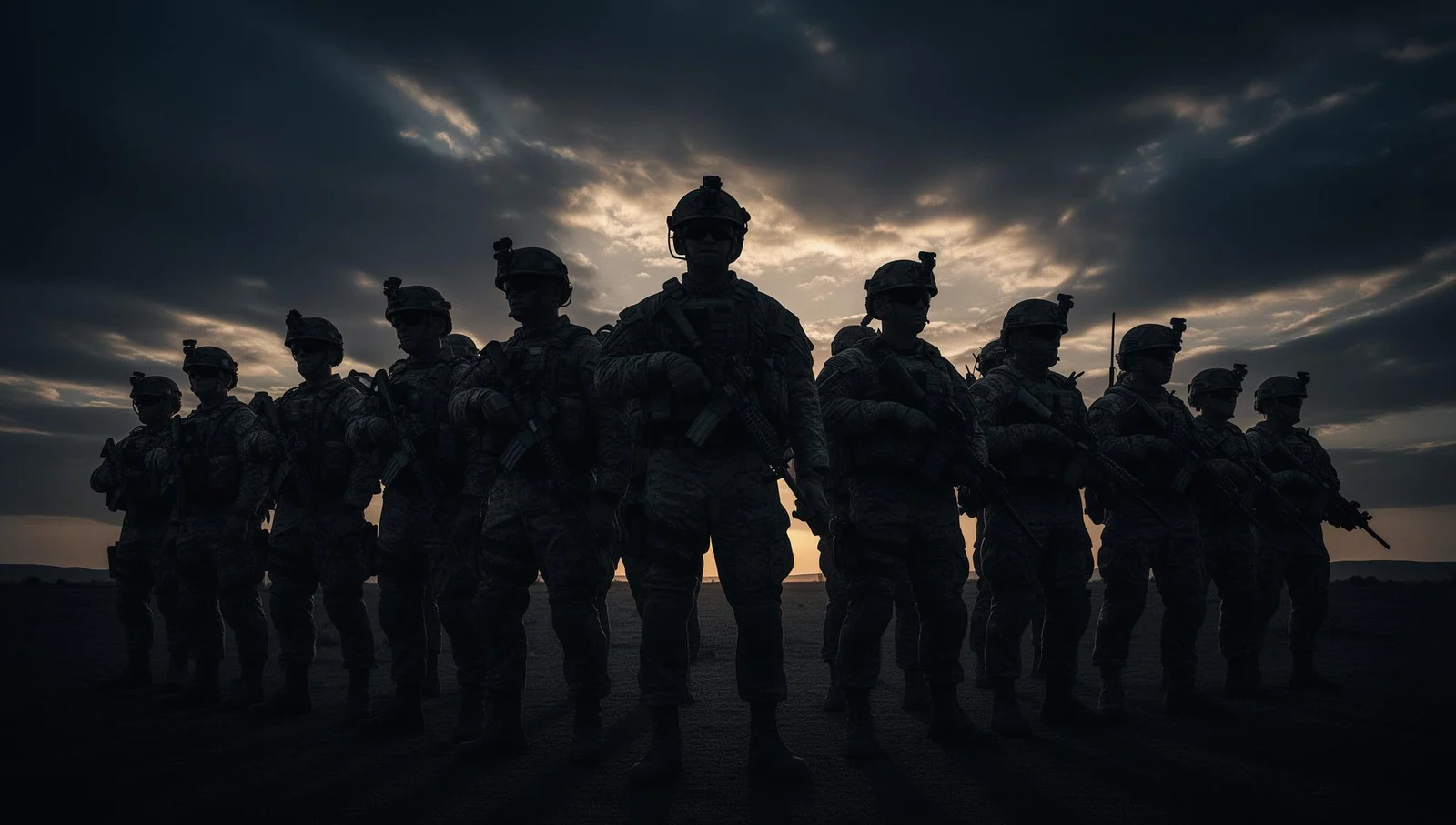
Decision-Making Under Pressure: What Special Operations Can Teach the Boardroom
The Uncomfortable Truth About Strategic Decision-Making
In March 2023, a mid-cap Australian resources company approved a $340 million expansion program. The board papers were thorough. The financial models were sophisticated. The management team was experienced and well-intentioned. Eighteen months later, the project was $120 million over budget, nine months behind schedule, and the CEO had resigned.
This is not an unusual story. It is, in fact, the norm.
Research from McKinsey & Company consistently demonstrates that large strategic initiatives fail to deliver their intended outcomes between 60 and 70 percent of the time. The Boston Consulting Group's own internal analysis puts the figure closer to 75 percent for transformation programs. These are not failures of intelligence or intention. They are failures of process.
The Paradox of Expertise Under Pressure
The cognitive science is unambiguous. Nobel laureate Daniel Kahneman's work on prospect theory and bounded rationality established that human decision-making degrades predictably under conditions of uncertainty, time pressure, and high stakes, precisely the conditions that characterise every significant strategic decision.
Yet these are also the conditions under which organisations most need their leaders to perform. The paradox is brutal: the moments that matter most are the moments where human cognition is least reliable.
Military organisations understood this paradox centuries before behavioural economics gave it academic language. In the Special Air Service Regiment, operators are trained to distrust their instincts in precisely those moments when instinct feels most compelling. Not because instinct is worthless, but because unstructured instinct under pressure produces systematically biased outcomes.
The military response was not to hire smarter people. It was to build better decision architectures.
What the Military Learned That Business Has Not
The distinction between military decision-making and corporate decision-making is not one of courage or competence. It is one of methodology.
Military planning doctrine, from the Australian Defence Force's Joint Military Appreciation Process to NATO's Comprehensive Operations Planning Directive, enforces a disciplined separation between problem diagnosis, option generation, option evaluation, and execution planning. Each phase has defined inputs, outputs, and quality gates. The process is designed to be robust against individual cognitive limitations because it distributes cognitive load across a structured framework.
Corporate strategy, by contrast, typically compresses these phases into a single, unstructured process. A leadership team retreats for two days, generates ideas on whiteboards, debates them using a mixture of data and politics, and emerges with a "strategic plan" that conflates aspiration with analysis.
The consequences are predictable. Without structured problem diagnosis, teams solve the wrong problems. Without disciplined option evaluation, they default to the most politically palatable choice rather than the most strategically sound one. Without rigorous execution planning, they produce documents that inspire confidence in the boardroom but provide no actionable guidance to the people who must deliver.
The Organisations That Get It Right
The pattern among high-performing organisations is remarkably consistent. Whether in defence, elite sport, or the small number of corporations that consistently outperform their peers, the common denominator is not superior talent. It is superior process.
These organisations invest in structured decision-making frameworks that separate the cognitive tasks involved in strategic choice. They train their leaders not just in what to think about, but in how to think about it. They build systems that surface dissent, challenge assumptions, and force intellectual rigour at every stage.
Consider how a structured three-phase approach might work in practice. In the first phase, diagnosis, the team maps the competitive landscape, identifies the three to five strategic imperatives that genuinely matter, and builds an evidence base that separates signal from noise. AI-augmented analysis accelerates this phase dramatically, processing market data, competitor filings, and internal performance metrics at a scale no human team could match.
In the second phase, evaluation, the team assesses strategic options against explicit financial, capability, and risk criteria. The key discipline here is making trade-offs visible. Every strategic choice involves giving something up, and the organisations that make the best decisions are those that confront trade-offs directly rather than papering over them with optimistic assumptions.
In the third phase, execution architecture, the team builds a live operating plan with assigned owners, defined milestones, and leading indicators that predict execution failure before it materialises. This is not a document. It is a management system.
The AI Multiplier
The integration of artificial intelligence into structured decision-making represents perhaps the most significant development in strategic management since the balanced scorecard. But the value of AI is not in replacing human judgement. It is in augmenting the structured process within which human judgement operates.
AI excels at pattern recognition across large, multidimensional datasets, precisely the task that overwhelms human cognition during the diagnostic phase. Machine learning models can identify correlations between operational variables, market conditions, and financial outcomes that no human analyst would detect. Natural language processing can synthesise thousands of competitor announcements, regulatory filings, and industry reports into actionable intelligence in hours rather than weeks.
But AI without structure is as dangerous as instinct without discipline. The organisations achieving the highest returns from AI-augmented strategy are those embedding AI tools within a rigorous decision-making framework, using technology to enhance each phase of a structured process rather than as a substitute for process itself.
Implications for the Senior Leader
The research points to three actionable conclusions for leaders responsible for strategic decisions.
First, invest in decision architecture before investing in decision-makers. The evidence consistently shows that a structured process with average talent outperforms unstructured brilliance. This is counterintuitive for leaders who built their careers on individual capability, but the data is unequivocal.
Second, separate diagnosis from prescription. The single most common failure mode in corporate strategy is the premature convergence on solutions before the problem has been adequately defined. Structured approaches that enforce a diagnostic phase before option generation consistently produce superior outcomes.
Third, build execution systems, not strategy documents. The gap between strategic intent and operational reality is where most value is destroyed. Organisations that treat execution planning as a rigorous discipline, with the same intellectual standards they apply to strategic analysis, close this gap systematically.
The challenge is not intellectual. It is institutional. Most organisations know their decision-making processes are inadequate. The question is whether they have the discipline to replace familiar dysfunction with structured rigour.
Peter Winnall is the founder of Rekon Group and a former Special Air Service Regiment officer. He has delivered structured decision-making programs to organisations including Sandvik, Serco, Woodside, Rio Tinto, Blooms The Chemist, Bingo Industries, and more.
References:
- Kahneman, D. (2011). Thinking, Fast and Slow. Farrar, Straus and Giroux.
- Lovallo, D., & Sibony, O. (2010). "The case for behavioral strategy." McKinsey Quarterly, March 2010.
- Klein, G. (1998). Sources of Power: How People Make Decisions. MIT Press.
- Australian Defence Force. (2019). Joint Military Appreciation Process (JMAP) Handbook.
Working on this in your organisation?
Book a 30-minute callWant your leaders trained in it?
See trainingDecision Lessons
One news story, one decision lesson, every fortnight. Unsubscribe any time.
Continue Reading
OKRs That Survive Contact With the Business
Most OKR rollouts fail in the second quarter. The failure is usually in how objectives were written, not in the framework itself.
6 min read
LeadershipWho Decides? Fixing Decision Rights in Mid-Cap Organisations
Slow organisations are rarely lazy. They are usually unclear about who decides. A practical method for mapping and fixing decision rights.
6 min read
LeadershipWhy Your Strategy Offsite Isn't Working: And What to Do Instead
Two days at a resort. A facilitator with sticky notes. A "strategy" document that sits in a drawer. Sound familiar? There's a better way.
5 min read